Venice – The Floating Miracle City Built on Water

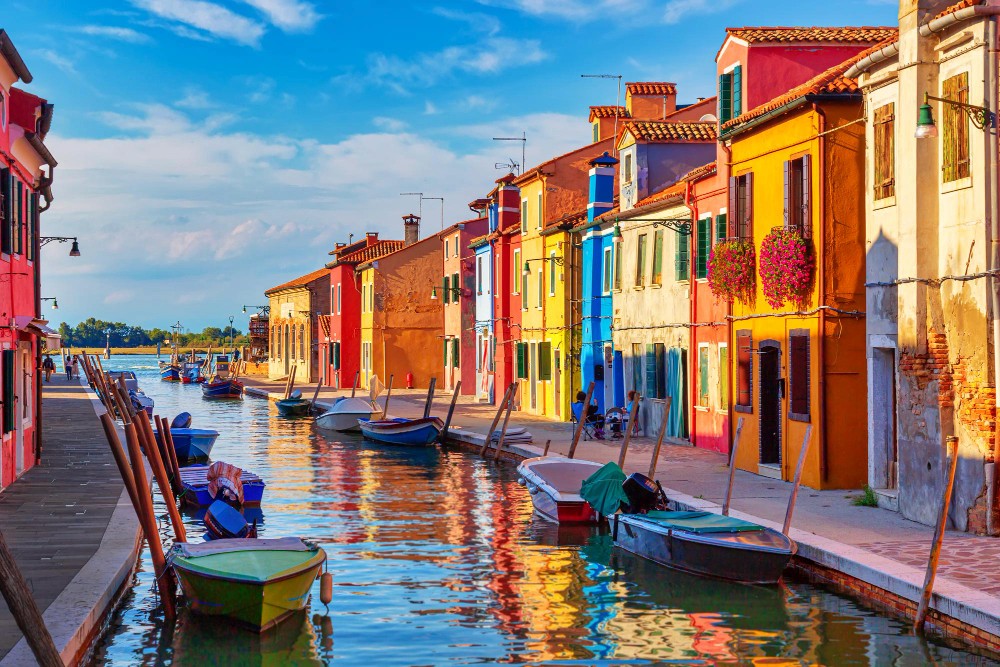
Imagine standing in St. Mark's Square (Piazza San Marco), the heart of one of the world's most beautiful cities. The air is alive with the chime of the campanile, the scent of the Adriatic, and the timeless, rhythmic song of a gondolier. Marble palaces rise majestically around you, yet beneath your feet, where solid ground should be, there is only water, and deeper still, a secret: millions of petrified wooden pilings.
For over 1,500 years, this silent forest of timber has supported a dazzling metropolis—a city of 118 small islands, over 400 bridges, 120 historic churches, and the homes of its resilient people. Venice is more than a geographical location; it is a monument to human ingenuity, a living testament to an engineering feat that turned a muddy lagoon into the capital of a powerful maritime republic.
Situated in the northern curve of the Adriatic Sea, where the salty tides meet the sweet flow of inland rivers, Venice rose against all odds. There are no streets here, no cars, only canals and boats. While the world faces an existential crisis from rising sea levels, 80% of Venice’s most historic structures still rely on this ancient wooden foundation. How has this vulnerable city resisted the forces of nature, even as global sea levels have risen by approximately 30 centimeters since 1900?
The answer lies buried deep within the lagoon's clay—a remarkable process where wood, starved of oxygen, has literally transformed into stone.
This comprehensive, 3000-word article will take you on a journey from the city’s desperate beginnings in the 5th century to the cutting-edge conservation efforts of 2025. We will explore the complex science of petrification, the specific species of timber used, the precise construction techniques, the billion-euro modern defense systems like the MOSE Project, and the existential questions surrounding its future.
Keywords for SEO: Venice History, Floating City, Wooden Piles, Venice Engineering, MOSE Project, Petrification Science, Venice Tourism 2025, Istrian Stone.
Genesis – From Refugee Camp to Maritime Republic
The Desperate Birth of a City (5th Century)
The founding of Venice is a story of flight and desperation. As the mighty Roman Empire crumbled in the 5th century, northern Italy became a target for relentless barbarian invasions. In 452 AD, the feared Hunnish King Attila swept through the region. Citizens from prosperous Roman towns like Padua, Aquileia, and Altinum fled to the inhospitable marshlands of the Venetian Lagoon.
The Sanctuary Strategy: The refugees sought refuge on the small, marshy islands scattered across the lagoon. The water depth here was shallow—often only 1 to 2 meters—and the islands were separated by narrow channels. Crucially, the soft, shifting terrain and shallow water made it impossible for the barbarian cavalry to pursue them.
Torcello: The First Permanent Settlement: The island of Torcello is generally recognized as the site of the first permanent, organized settlement. The construction of the first known church here in 421 AD marked the beginning of their new, aquatic existence. The challenge was immediate: the soft, muddy lagoon floor could not support traditional stone foundations. Necessity birthed the revolutionary solution: a foundation built entirely on wood.
The Shift to Rialto and the Rise of La Serenissima
Initially, the settlements remained fragmented. However, as the community grew and the threat of invasion subsided, a central hub was needed for trade and governance. In 811 AD, the capital was officially moved to the more strategically positioned Rialto (Latin: Rivoaltus - "High Bank") group of islands.
Strategic Location: Rialto offered deeper, more reliable channels perfect for shipbuilding and commerce.
The Naming: The developing city took the name Venetia (Venice), and over the next five centuries, it transformed from a cluster of islands into La Serenissima (The Most Serene Republic of Venice), an unmatched economic, political, and artistic powerhouse that dominated Mediterranean trade.
Fact Update (2025): While the historical core's population has drastically declined to approximately 49,800 (a 70% drop since 1951), the spirit of the Serenissima endures, attracting over 30 million tourists annually, making it a crucial case study in over-tourism management.
The Engineering Miracle – How Wood Became Stone
The most persistent question about Venice is often the simplest: Why hasn't the wood rotted? The answer is a convergence of perfect environmental conditions and profound engineering intuition—a process known as petrification or mineralization.
The Science of Petrification in the Lagoon
Wood typically rots because of two primary factors: oxygen and aerobic bacteria, which break down the cellulose structure. Venice's wooden pilings are protected by two critical layers:
The Water Layer (Anoxic Environment): The pilings are completely submerged below the water line and permanently encased in the deep, saline mud of the lagoon. This water-logged environment creates an anoxic (oxygen-depleted) zone. Without oxygen, the destructive aerobic bacteria cannot survive, effectively halting the typical decomposition process.
The Mud/Clay Layer (Mineral Infiltration): The lagoon's dense, mineral-rich clay and mud act as a seal and a source of vital materials. As the wood's cells, particularly the porous xylem tissue, become saturated, the pores begin to fill with dissolved minerals from the surrounding brackish water—primarily Calcium Carbonate (limestone) and Silica.
The Mineral Exchange: Over centuries, these minerals replace the organic structure of the wood cell by cell, without altering the wood’s original form. The cellulose and lignin are slowly substituted by crystalline mineral deposits. The wood doesn't merely survive; it is structurally transformed.
Hardness Update (2025 Research): Recent analysis, including a 2025 study by researchers from the University of Padua examining 1,200-year-old pilings, confirms this transformation. The structure is no longer wood; it is a fossilized composite with a hardness approaching that of steel (often rated high on the Mohs scale, similar to geological stone).
Step in Petrification | What Happens | Result |
Step 1: Submersion | Wood is completely submerged in an anoxic layer. | Aerobic bacteria die; rot stops. |
Step 2: Mineral Infiltration | Mineral-rich water fills the wood's porous structure. | Calcium Carbonate and Silica deposit in cells. |
Step 3: Cell Replacement | Minerals slowly replace organic cell walls (cellulose/lignin). | Structure retains shape but transforms into a composite. |
Step 4: Final State | The wooden pile becomes a mineralized, stone-like fossil. | Hardness approaches steel; Longevity exceeds a millennium. |
The Right Wood for the Right Job: Timber Selection
The Venetian engineers were not only intuitive about the lagoon environment but also masterful in material selection. They selected specific species that possessed intrinsic properties ideal for submerged conditions.
Timber Species | Primary Source Region | Key Properties for Venice |
European Alder (Alnus glutinosa) | Slovenia | Releases tannins, natural preservatives that inhibit fungal growth even in low-oxygen environments. Highly resistant to water saturation. |
Oak (Quercus) | Croatia, Istria | Extremely dense, strong, and highly durable. Provided structural integrity under massive loads. |
Larch (Larix decidua) | Alpine Forests | Rich in resin, a natural waterproofing agent that further sealed the wood against water penetration and microbial activity. |
Elm (Ulmus) | Northern Italy | Flexible and resilient, which prevented snapping or splintering when driven deep into the thick, resistant clay layer. |
The scale of this operation was colossal. Vast forests across the Dolomites, Slovenia, the Alps, and Istria were harvested. The logistical challenge of floating millions of pilings across hundreds of kilometers of sea and river to the lagoon underscores the wealth and organizational power of the fledgling republic. It was an investment that has paid dividends for over fifteen centuries.
The Anatomy of a Floating Palace (Construction Techniques)
Foundation Depth and Density: Detailed figures on the average depth (10-25m) and density (9-12 piles per square meter).
The Driving Method: Description of the ancient, non-mechanized technique using gravity and repeated blows to drive the piles into the dense caranto (a layer of compressed clay and sand).
The Platform: Explanation of the horizontal wooden rafts (zattere) laid over the trimmed pilings.
The Istrian Stone Layer: Deep dive into the properties of Istrian stone (a dense, non-porous limestone) and its role as a capillary break to prevent salt and water from rising into the brick superstructure.
Statistical Marvels: Updated estimates of the total number of pilings:
Santa Maria della Salute Church: 1,060,000 pilings.
Doge's Palace (Palazzo Ducale): Estimated 1.2 million pilings.
Total City Estimate: 10–15 million pilings.
The Modern Threat and The Billion-Euro Shield
Subsidization vs. Sea-Level Rise: Explaining the twin threats: eustatic sea-level rise (global) and subsidence (the city sinking due to geological factors and water extraction). Updated statistic: 30 cm subsidence/rise since 1900.
Acqua Alta (High Water) Phenomena: The history and increased frequency of major floods (e.g., the 1966 event vs. modern events).
The MOSE Project (MOdulo Sperimentale Elettromeccanico):
Technical Details: Description of the 78 massive mobile barriers across the three inlets (Lido, Malamocco, Chioggia).
Operation and Success Rate (2025 Update): Reviewing the project's performance. Since its initial full deployment in late 2020, MOSE has been raised over 50 times, successfully protecting the city during exceptional high tides.
Controversies and Cost: Discussing the €6.5 billion budget, maintenance costs (€100 million annually), and environmental concerns regarding the lagoon's ecosystem.
The New Enemies and Conservation in 2025
The Oxidation Threat: The danger posed to the wooden foundations if sea level drops during construction or extremely low tides, exposing the tops of the piles to oxygen, which reactivates rot.
Sulphate-Reducing Bacteria (SRB): Analysis of the microbiological threats—bacteria that thrive in brackish water and can erode stone and concrete, accelerating decay.
Modern Monitoring and Restoration:
Digital Preservation: Use of 3D scanning (e.g., at St. Mark’s Basilica) and underwater sensor technology (e.g., Rialto Bridge project) to track structural integrity.
Major Restoration Projects (2025): Updates on key efforts like the stabilization of the Basilica di San Marco and major canal wall reinforcement.
Socio-Economics and The Future of Venice
Over-Tourism Crisis: Analysis of the strain of 30 million annual visitors on the physical and social fabric of the city.
The Cruise Ship Ban and Tourist Caps (2025 Policy): Detailed breakdown of the new policies, including the implementation of the Contributo di Accesso (Access Fee/Tourist Tax) and the proposed daily visitor limit (e.g., a 25,000-person limit being tested).
Submergence Projections: Discussing the latest IPCC reports and local projections for the next century (e.g., a potential 1-meter rise by 2100 without MOSE).
The Global Model: Comparing Venice's approach to other cities built on water (Amsterdam, St. Petersburg) and its role as a global laboratory for climate adaptation.
Conclusion
Synthesizing the Marvel: A final summary emphasizing the seamless blend of ancient engineering (wood petrification) and modern technology (MOSE).
The Lesson of the Lagoon: Venice is a timeless metaphor: an acknowledgment that fighting nature is futile, but working with it—turning an enemy (water and mud) into a foundation—is the ultimate act of preservation.
Final Call to Action/Reflection: When standing in Venice, recognize that you are not just walking on a city, but on a 1,500-year-old fossilized forest—the heartbeat of human endeavor.