John Cena - Story of a Legend and his Never Give Up

If you have watched even a single minute of professional wrestling or popular culture over the last two decades, you know the trumpet fanfare. You know the hand wave. And you definitely know the phrase: "You Can't See Me."
John Cena is far more than a household name in sports entertainment; he is a global brand, a Hollywood heavyweight, a philanthropist of historical proportions, and a living monument to the human spirit. His rise from an impoverished young man sleeping in the back seat of a beat-up sedan to a 17-time World Champion and blockbuster film star reads like a modern-day fable. Yet, every chapter of his life is grounded in an unyielding work ethic and encapsulated by his personal creed: "Hustle, Loyalty, Respect" and "Never Give Up."
As John Cena officially transitions out of the ring following his historic 2025 retirement tour, his journey offers a masterclass in resilience, self-reinvention, and leadership. This is the exhaustive story of the man, the legend, and the massive legacy he leaves behind.
Foundations of a Titan – West Newbury and Early Roots
John Felix Anthony Cena was born on April 23, 1977, in West Newbury, Massachusetts a quiet, idyllic town where life moved at a modest pace. He was the second of five boys born to John Joseph Cena and Carol Cena. Growing up in a household brimming with five energetic brothers guaranteed an environment that was loud, competitive, and constantly active.
His father, John Joseph Cena, worked as a professional wrestling announcer and promoter (under the name "Johnny Fabulous"), which exposed young John to the colorful world of World Wrestling Federation (WWF) programming from an exceptionally early age. While his brothers pursued various interests, John became captivated by the larger-than-life characters on screen, worshipping heroes like Hulk Hogan, Roddy Piper, and Shawn Michaels.
Transforming Vulnerability into Power
Despite the muscle-bound physique he would later possess, Cena’s early adolescent years were marked by insecurity. In middle school, he was a skinny, oddly dressed kid who often fell victim to relentless bullying. Rather than retreating into isolation, Cena made a decision that would dictate the trajectory of his entire life: at age 12, he asked his father for a weight bench for Christmas.
That simple weight bench transformed his room into a sanctuary. Cena poured his frustration into physical training, developing an ironclad discipline that saw him gain noticeable strength and muscle mass by high school. By the time he attended Cushing Academy, a private boarding school in Ashburnham, Massachusetts, he was no longer a target for bullies he was an standout elite athlete.
The Springfield College Years
Cena enrolled at Springfield College in Massachusetts, an institution renowned for its sports science and athletic programs. There, he played Division III football as an offensive lineman. As an All-American center and team captain, Cena wore the No. 54 jersey a number that would later become legendary among wrestling fans as a recurring easter egg embedded within his signature merchandise.
In 1998, Cena graduated with a Bachelor of Science degree in Exercise Physiology. His parents envisioned a stable career for him as a physical therapist, personal trainer, or strength coach. However, Cena harbored a quiet, burning ambition that extended far beyond traditional corporate or clinical boundaries.
The Venice Beach Crucible – $500 and a Lincoln Continental
In late 1998, against his father’s strong initial advice, 21-year-old John Cena packed his bags and moved to Southern California. He arrived in Venice Beach with exactly $500 in his pocket, no guaranteed job, and a dream of breaking into the ultra-competitive world of professional bodybuilding.
Reality struck immediately. Southern California’s cost of living swallowed his tiny cash reserve within days. Unable to afford an apartment, Cena was forced to make a drastic compromise. He spent his nights sleeping in the back seat of his 1991 Lincoln Continental, using his workout bags as pillows and public beach showers to stay clean.
"I didn't want to call my dad and say, 'I failed, buy me a plane ticket home.' I made the choice to go out there, so I had to endure whatever came with it. Sleeping in my car wasn't tragic to me back then it was just the rent I had to pay for my dream." - John Cena
The Gold's Gym Hustle
During the day, Cena worked at the iconic Gold’s Gym in Venice, California. His duties were far from glamorous: he cleaned toilets, folded sweat-stained towels, and worked the front desk for minimum wage. Yet, working at Gold's Gym placed him directly in the epicenter of physical fitness culture. He surrounded himself with elite bodybuilders, learning advanced nutritional science, recovery protocols, and mental endurance techniques.
This period of severe hardship forged the psychological bedrock of Cena's personality. The grueling daily grind working long shifts at the gym, training until exhaustion, and returning to sleep in a cramped 1991 sedan proved to be the true birthplace of his famous "Never Give Up" ethos.
The Genesis of "The Prototype" and Ohio Valley Wrestling
In late 1999, while working the front desk at Gold’s Gym, Cena struck up a conversation with a wrestler who suggested he train at Ultimate Pro Wrestling (UPW), an independent wrestling school based in Ultimate University in Southern California.
Cena agreed, diving headfirst into the mechanics of professional wrestling. He quickly devised a gimmick known as "The Prototype" a half-human, half-robotic corporate creation who spoke with mechanical cadence and performed ring moves with machine-like precision. His incredible physical condition, combined with an innate ability to cut compelling promos, made him an immediate sensation on the local independent scene.
The Historic OVW Class of 2002
By 2001, talent scouts from the World Wrestling Federation (WWF, now WWE) had taken notice. Cena signed a developmental contract and was dispatched to Ohio Valley Wrestling (OVW) in Louisville, Kentucky, which served as WWE's primary developmental territory under the direction of legendary trainer Jim Cornette.
The early-2000s OVW roster is widely regarded by wrestling historians as the single greatest concentration of future talent in the history of the business. Cena found himself developing his craft alongside four men who would shape the future of professional wrestling:
Brock Lesnar: An Olympic-level collegiate wrestling phenom.
Randy Orton: A third-generation wrestling prodigy with fluid athleticism.
Batista (Dave Bautista): A towering powerhouse destined for Hollywood stardom.
Shelton Benjamin: One of the most gifted pure athletes ever to step inside a ring.
As "The Prototype," Cena held the OVW Heavyweight Championship and OVW Southern Tag Team Championship, constantly pushing himself to match the ferocious intensity of Lesnar and Orton.
"Ruthless Aggression" and the Rap Revolution
On June 27, 2002, an episode of SmackDown! changed professional wrestling history. WWE Hall of Famer Kurt Angle stepped into the ring to issue an open challenge to anyone in the locker room who possessed the courage to face him.
An unheralded rookie with short crew-cut hair and simple red trunks answered the call. When Angle demanded to know what quality gave him the confidence to stand in the ring with an Olympic Gold Medalist, the young man shouted two words that would define an entire WWE era: "Ruthless Aggression!"
Though Cena lost the match via a desperate roll-up by Angle, his explosive performance captured the locker room's attention. Backstage, legends like The Undertaker publicly shook his hand a rare and coveted endorsement.
The Threat of Being Fired
Despite an explosive debut, Cena quickly ran into a creative wall. His generic "clean-cut hero" persona failed to connect deeply with audiences, and within months, he was struggling to find television time. WWE management was actively considering releasing him from his contract during late-2002 roster cuts.
His career was saved by a completely spontaneous event on a European tour bus.
The Birth of "The Doctor of Thugonomics"
While traveling between tour dates, several wrestlers were freestyle rapping in the back of the bus to pass the time. Cena joined in, delivering intricate, witty, and barbed rhymes that left the locker room in stitches. WWE Executive Vice President Stephanie McMahon happened to overhear him. Amazed by his rhythm and verbal sharpness, she asked if he could channel that energy into his on-screen television character.
On the Halloween 2002 episode of SmackDown!, Cena appeared dressed as Vanilla Ice and delivered a rap promo. The segment was a massive hit. Within weeks, he fully embraced a new persona: "The Doctor of Thugonomics."
Dressed in throwback NBA and NFL jerseys, heavy steel chains, pump-up sneakers, and backward caps, Cena began walking to the ring rapping original diss tracks that roasted his opponents. Though he initially operated as a villainous "heel," his sheer intelligence, comedic timing, and raw charisma made him impossible to hate. The audience began cheering for him, forcing WWE to turn him into the flagship fan-favorite ("babyface") of the franchise.
Becoming the Face of the Franchise
By 2005, WWE was searching for a new marquee icon to lead the company following the departures of Stone Cold Steve Austin and The Rock. At WrestleMania 21 in Los Angeles, California, John Cena defeated John "Bradshaw" Layfield (JBL) to win his very first WWE Championship.
To cement this victory, Cena introduced the famous Spinner Belt a customized WWE Championship belt featuring a spinning diamond-encrusted logo that reflected his hip-hop gimmick. The belt was an unprecedented merchandise success, signaling that the John Cena Era had officially arrived.
The Transition to "Hustle, Loyalty, Respect"
As WWE shifted toward PG-rated family programming in the late 2000s, Cena deliberately evolved his persona once again. He retired the edgy rap gimmick and replaced it with a military-inspired, high-integrity character driven by three core tenets: Hustle, Loyalty, and Respect.
Wearing bright neon t-shirts, dog tags, and denim shorts (jorts), Cena transformed into a real-life superhero for millions of children around the world. He treated every match as a duty, ran to the ring with boundless energy, and never backed down from a challenge.
The Polarizing Era: "Let's Go Cena! / Cena Sucks!"
Cena’s relentless push as the ultimate unbeatable hero produced an extraordinary cultural phenomenon: the divided audience. While young children, mothers, and casual viewers idolized Cena, vocal adult "hardcore" fans rebelled against his dominant booking and colorful merchandise.
This dynamic created the most famous dual chant in wrestling history:
Left side of the arena: "LET'S GO CENA!"
Right side of the arena: "CENA SUCKS!"
Rather than being rattled by the hostility, Cena mastered the art of working with divided crowds. He embraced the noise, acknowledging that dynamic engagement whether cheers or boos was the truest measure of a performer's connection with the crowd. For over a decade, Cena headlined nearly every major pay-per-view, carrying the entire corporate weight of WWE on his shoulders.
Legendary Rivalries That Defined an Era
John Cena’s legendary career was forged in the fire of unforgettable rivalries against some of the greatest ring generals in history:
John Cena vs. Edge
The feud with Edge in 2006 set the standard for modern wrestling storylines. Edge became the first man to successfully cash in a Money in the Bank briefcase on Cena at New Year's Revolution 2006. Their bitter personal rivalry spanned TLC matches, steel cage battles, and home invasions, elevating both men into permanent main-event status.
John Cena vs. CM Punk
In 2011, CM Punk dropped his world-famous "Pipebomb" promo, attacking the corporate machine that Cena represented. Their match at Money in the Bank 2011 in Chicago is widely recognized as one of the few 5-star matches of that era. The contrast between Cena (the corporate superhero) and Punk (the anti-establishment rebel) produced unmatched narrative tension.
John Cena vs. The Rock
Billed as a "Once in a Lifetime" showdown, Cena and Dwayne "The Rock" Johnson engaged in a personal two-year war of words that bridged two different generations of wrestling icons. They headlined WrestleMania 28 (Miami) and WrestleMania 29 (New York), setting all-time pay-per-view revenue and attendance records for WWE.
John Cena vs. AJ Styles
In 2016, indie icon AJ Styles arrived in WWE to challenge Cena’s dominance. Their feud culminated at the 2017 Royal Rumble, where Cena defeated Styles in an extraordinary technical clinic to capture his 16th World Championship, tying Ric Flair’s legendary record.
The U.S. Open Challenge – Silencing the Critics
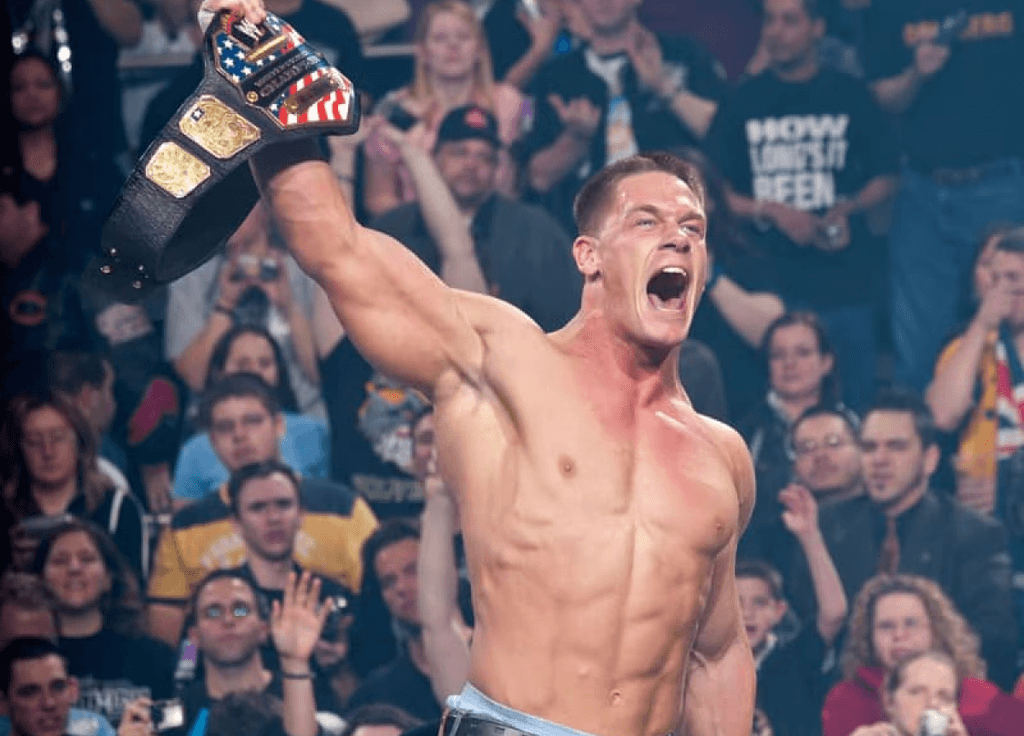
In 2015, after spending a decade at the top of the World Championship scene, Cena took a step back to capture the WWE United States Championship. What followed turned out to be one of the most critically acclaimed periods of his entire career: The U.S. Open Challenge.
Every week on live television (Monday Night Raw), Cena issued an open challenge to anyone in the locker room, regardless of brand or status. These matches were given ample time, dynamic booking, and elite workrate.
Through the U.S. Open Challenge, Cena helped legitimize and elevate a new generation of rising stars, including:
Kevin Owens: Who made his main roster debut by answering Cena's challenge and shocking the world at Elimination Chamber.
Sami Zayn: Who answered the challenge in a legendary hometown moment in Montreal.
Cesaro, Neville, and Rusev: Who all had career-best television matches against Cena.
This run earned Cena immense respect from hardcore wrestling critics, proving beyond doubt his elite storytelling capability and ring mastery.
Hollywood Conquest and Global Stardom
Much like his predecessor Dwayne Johnson, Cena naturally caught the attention of Hollywood executives. His initial venture into film began with WWE Studios action films like The Marine (2006) and 12 Rounds (2009). While these established his credentials as a capable action star, Cena realized that his true comedic talent remained untapped.
His big Hollywood breakthrough came in Judd Apatow’s 2015 comedy Trainwreck, alongside Amy Schumer. Cena’s scene-stealing, deadpan comedic delivery took audiences and critics by surprise. He quickly followed this success with brilliant comedic performances in Blockers (2018) and Vacation Friends (2021).
The Blockbuster Era and DC's Peacemaker
Cena soon transitioned into massive franchise blockbusters:
Bumblebee (2018): Playing the rugged military officer Jack Burns.
F9: The Fast Saga (2021): Portraying Jakob Toretto, the estranged, deadly brother of Vin Diesel’s character, Dom Toretto.
The Suicide Squad (2021): Directed by James Gunn, Cena landed the role of Christopher Smith / Peacemaker a hypocritical vigilante who fights for peace at all costs.
His performance in The Suicide Squad was so compelling that James Gunn created a spinoff television series, Peacemaker, on HBO Max. The show received overwhelming critical acclaim, displaying Cena's profound emotional range, vulnerability, and physical physical acting prowess.
International Diplomacy and Learning Mandarin Chinese
Cena's dedication to his craft extends well beyond acting mechanics. Recognizing the growing global significance of the Chinese film and entertainment market, Cena spent years teaching himself Mandarin Chinese.
Without relying on translators, he has conducted entire 20-minute press conferences and social media promotional videos in fluent Mandarin to connect directly with fans in Asia. This commitment to cross-cultural bridge-building stands as a prime example of his work ethic.
The Heart of a Champion – Historic Philanthropy
If you ask John Cena what his greatest lifetime achievement is, he will not point to his world titles, his movie box office numbers, or his custom championship belts. He will talk about the Make-A-Wish Foundation.
John Cena holds the official Guinness World Record for the most wishes granted through the Make-A-Wish Foundation, with over 650 wishes granted to children with critical illnesses. No other individual in history has granted even 300 wishes.
What makes Cena’s philanthropic work extraordinary is his complete lack of grandstanding. He rarely brings cameras to his visits, often spending hours privately chatting, playing games, and building deep emotional bonds with terminally ill children and their families. He has never turned down a single request from the foundation in over two decades of service.
The Grand Finale – The 2025 Retirement Tour and the 17th World Title
At the Money in the Bank pay-per-view in Toronto in July 2024, John Cena shocked the sports world by walking to the ring to make a historic announcement. He revealed that 2025 would mark his final year as an active professional wrestler.
Rather than quietly walking away, Cena wanted to embark on an extensive, year-long Farewell Tour across 2025, giving fans across the world one final opportunity to bid him farewell in person.
WrestleMania 41: Breaking Ric Flair's Record
The crown jewel of Cena’s 2025 Farewell Tour culminated at WrestleMania 41. In a dramatic, deeply emotional main-event match, Cena faced off against the reigning champion, Cody Rhodes.
In an extraordinary display of ring storytelling that referenced his entire 23-year career, Cena executed a decisive Attitude Adjustment to win the match and claim his 17th World Championship.
By securing this victory, Cena officially broke the decades-long tie with WWE Hall of Famer Ric Flair (16 titles), cementing his status as the most decorated World Champion in professional wrestling history.
Passing the Torch and Hanging Up the Boots
In a remarkable display of his lifelong respect for the wrestling business, Cena did not hold the championship hostage. Just weeks after his historic 17th title win, Cena voluntarily vacated the title on live television, declaring that the future of the company belonged to the rising generation.
He unlaced his signature sneakers, placed them in the center of the ring alongside his towel, gave one final salute to the audience, and walked up the ramp into eternal retirement.
Comprehensive Career Snapshot
Below is the definitive summary table highlighting the major milestones, championships, and humanitarian achievements of John Cena’s historic career:
Metric / Category | Details & Statistics |
Full Legal Name | John Felix Anthony Cena Jr. |
Date of Birth | April 23, 1977 (West Newbury, Massachusetts) |
Alma Mater | Springfield College (B.S. in Exercise Physiology, 1998) |
WWE Main Roster Debut | June 27, 2002 (vs. Kurt Angle on SmackDown!) |
World Championships (17) | 14 WWE Championships, 3 World Heavyweight Championships (All-Time Record) |
United States Championships | 5 Times (Introduced the famous U.S. Open Challenge) |
Tag Team Championships | 4 Times (With Shawn Michaels, Batista, David Otunga, and The Miz) |
Royal Rumble Victories | 2 Times (2008 in MSG, 2013) |
Money in the Bank Winner | 1 Time (2012) |
Slammy Awards | 10 Times (Including Superstar of the Year in 2009, 2010, 2012) |
Breakout Movie Roles | Trainwreck (2015), Bumblebee (2018), F9 (2021), The Suicide Squad (2021) |
Hit Television Series | Peacemaker (HBO Max) |
Make-A-Wish Record | >650 Wishes Granted (Guinness World Record Holder) |
Language Skills | English (Native), Mandarin Chinese (Conversational) |
Official Retirement Year | 2025 (Concluded at WrestleMania 41) |
Behind the Icon – Personal Life, Quirks, and Fun Facts
Despite spending over two decades in the relentless spotlight of global media, John Cena maintains a remarkably disciplined and private personal life.
Personal Life & Marriage
In October 2020, Cena married Shay Shariatzadeh, an Iranian-born Canadian engineer whom he met while filming the movie Playing with Fire in Vancouver. The couple held an intimate, private ceremony in Tampa, Florida, preferring to keep their relationship far away from tabloid drama.
Unique Facts and Personal Quirks
Terrified of Spiders: Despite facing 300-pound giants inside steel cages, Cena suffers from genuine arachnophobia and is deeply afraid of spiders.
Zero Tattoos: In an industry where bodily tattoos are almost a uniform, Cena has zero tattoos. Early in his career, he promised his mother that he would keep his body clear of ink, a promise he has honored to this day.
Avid Muscle Car Collector: Cena is a passionate car enthusiast. His personal garage features an extensive collection of rare American muscle cars and exotics, including a 1970 Plymouth Superbird, a 1966 Dodge Hemi Charger, and customized Corvettes.
Conclusion – The Enduring Legacy of "Never Give Up"
John Cena’s story is the ultimate validation of the American dream. He did not achieve success through short cuts or overnight viral luck; he earned it through relentless, unyielding struggle.
He walked into Venice Beach with $500, slept in his Lincoln Continental, folded towels at Gold’s Gym, faced release early in his wrestling career, and transformed every roadblock into fuel for success. Through sheer force of will, he became:
The undisputed face of professional wrestling for over fifteen years.
The most decorated champion in wrestling history with 17 World Titles.
A charismatic Hollywood leading man capable of mastering action, comedy, and drama.
The greatest humanitarian in the history of the Make-A-Wish Foundation.
As John Cena hangs up his wrestling boots following his historic 2025 farewell tour, his presence inside the ring will be deeply missed. However, the culture he created will live forever. He showed millions of people around the world that no matter how difficult the circumstances, if you live with Hustle, Loyalty, and Respect, and if you truly Never Give Up, you can reshape your entire destiny.