The World's First Trillionaire - An Enigmatic Race

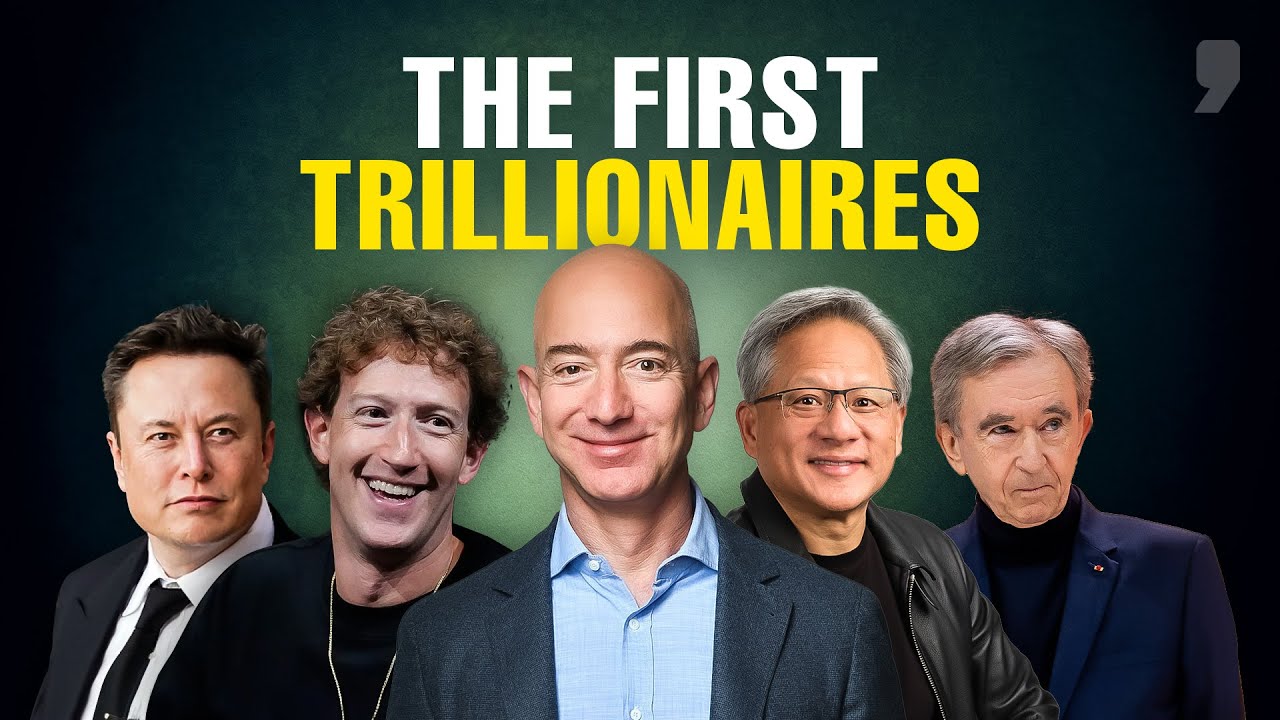
The pursuit of wealth has always captivated humanity, marking historical shifts from land to industry, and now, to technology and digital assets. For decades, the billionaire status stood as the ultimate pinnacle of financial success. Names like John D. Rockefeller, Andrew Carnegie, and, more recently, Bill Gates and Warren Buffett, symbolized this elite club. Yet, the economic landscape is evolving at an unprecedented pace. Today, the conversation has moved beyond mere billions to an entirely new, almost mythological figure: the world's first trillionaire (a person possessing $1,000,000,000,000).
Who will cross this astronomical threshold? Will it be the visionary innovator, Elon Musk? The e-commerce and space pioneer, Jeff Bezos? Or could the crown be claimed by an individual whose very existence is shrouded in mystery, an unknown entity with a decentralized fortune: Satoshi Nakamoto, the creator of Bitcoin? This question is more than a trivial observation; it is a profound indicator of the shifting vectors of global power, technology, and finance.
The Established Titans - Musk, Bezos, and the Traditional Race
The current frontrunners in the global wealth race are no strangers to the limelight. They are the architects of modern technology, whose net worths though volatile consistently dominate financial headlines.
Elon Musk - The Multi-Industry Visionary
As the principal figure behind SpaceX, Tesla, Neuralink, and X (formerly Twitter), Elon Musk embodies the modern-day polymath. His net worth is a dynamic, often volatile, reflection of the stock market's faith in his ventures. While his peak net worth previously soared past $400 billion, market fluctuations and controversial corporate decisions - particularly concerning Tesla's stock performance—have shown the fragility of a fortune tied largely to public equity.
The Trillionaire Thesis for Musk:
Musk's potential for reaching $1 trillion relies on the success of his most futuristic, high-multiplier enterprises:
SpaceX: The exponential valuation of SpaceX is tied to its dominance in launch services, the rapid expansion of its Starlink satellite internet constellation, and the realization of its long-term vision for Mars colonization. Analysts suggest that Starlink alone could eventually be valued at over $1 trillion.
Tesla (TSLA): While currently the backbone of his fortune, the next phase of Tesla's valuation hinges on its successful transition into a robotics and Artificial Intelligence (AI) company. If Tesla can commercialize its Optimus robot and achieve true Level 5 autonomy, its market capitalization could see another massive surge, as it would be selling AI-powered services rather than just vehicles.
Neuralink: A successful, mass-market neurotechnology that merges human and machine intelligence would fundamentally restructure entire industries, delivering a massive, unprecedented return on investment that could single-handedly push Musk into the trillionaire category.
Analytic models suggest that if Tesla's stock can maintain an average annual growth rate of 25-30% (a demanding but not impossible trajectory for a disruptive tech stock) alongside the continued private valuation growth of SpaceX, Musk could realistically hit the $1 trillion mark by the early 2030s.
Jeff Bezos - E-Commerce, Cloud, and the New Space Frontier
Jeff Bezos, the founder of Amazon, built his fortune on the twin pillars of e-commerce dominance and the explosive growth of Amazon Web Services (AWS) - the profitable cloud computing powerhouse. Despite stepping down from the CEO role, his wealth remains immense, primarily linked to his stake in Amazon and his burgeoning space venture, Blue Origin.
The Trillionaire Thesis for Bezos:
Bezos's path is more stable but potentially slower than Musk's, relying on the predictable, massive growth of established markets:
Amazon and AWS: AWS continues to be the primary engine of Amazon’s profitability. Its valuation will continue to climb as long as global demand for cloud infrastructure, storage, and AI processing power remains high.
Blue Origin: Similar to SpaceX, Blue Origin's value will soar if it can secure substantial government and commercial contracts for space tourism, orbital deployment, and resource exploitation. Bezos has poured significant personal capital into this venture, signaling his belief in its long-term, exponential returns.
The Power of Stability: Unlike Musk's more volatile portfolio, Bezos’s holdings in Amazon are generally seen as less subject to the individual personality or political volatility of its founder, offering a steadier, albeit more gradual, ascent.
For Bezos to reach $1 trillion, he would likely need a massive re-valuation of Amazon (perhaps driven by revolutionary retail or AI integration) combined with a valuation of Blue Origin comparable to the highest projections for SpaceX.
Satoshi Nakamoto - The Ghost in the Machine
The race takes a sharp and unexpected turn away from corporate boardrooms and public market cap analysis, leading into the decentralized, cryptographic world of Bitcoin. The ultimate, and perhaps most probable, candidate for the first trillionaire is someone no one has ever truly met: Satoshi Nakamoto.
The Architect of a Decentralized Revolution
Satoshi Nakamoto is the pseudonym used by the person or group who authored the seminal 2008 white paper, “Bitcoin: A Peer-to-Peer Electronic Cash System,” and subsequently deployed the first blockchain network in 2009. Satoshi’s identity remains one of the great mysteries of the 21st century—a deliberate choice that cemented Bitcoin's decentralized ethos, proving it could function without a central authority or figurehead.
Nakamoto famously vanished from the public eye and communication channels in 2011, handing over control of the code repository to other developers. This departure ensured that Bitcoin truly belonged to the network and not to its creator.
The $1 Million Bitcoin and the Trillionaire Portfolio
It is estimated through blockchain analysis that Satoshi Nakamoto mined roughly one million Bitcoin (1,000,000 BTC) in the very early stages of the network, particularly from the first blocks. These coins, often referred to as "Satoshi’s stack," have remained untouched in their original digital wallets. The movement of these coins would be a monumental event, instantly verifiable on the public ledger.
As of the current date in this scenario (where BTC is valued at $118,000), Satoshi's stack is already valued at approximately $118 billion, instantly placing this anonymous figure among the top global billionaires.
The Critical Forecast:
The core of Satoshi’s trillionaire potential rests on one simple premise: the continued, exponential rise in the price of Bitcoin.
The Price Target: For Satoshi’s 1 million BTC to equal $1 trillion, the price of a single Bitcoin must reach $1,000,000 (One Million Dollars).
The Bull Case for $1M BTC: Cryptographic analysts and prominent investors often cite the following drivers for this potential price point:
Halving Cycles: Bitcoin's supply shock events (halvings) consistently drive up scarcity and demand.
Institutional Adoption: The introduction of regulated financial products, such as spot Bitcoin ETFs, has brought massive institutional capital into the asset class, solidifying its acceptance as "digital gold."
Global Monetary Turmoil: Bitcoin is increasingly seen as a hedge against global currency devaluation and inflation, driving demand from both individual investors and sovereign entities.
Fixed Supply (Scarcity): With a hard cap of 21 million coins, Bitcoin is inherently deflationary, ensuring that as global liquidity increases, the price of the fixed asset must rise.
If the trajectory of institutional adoption and scarcity plays out as many predict, the $1 million per Bitcoin milestone is considered highly probable by many in the crypto community, making Satoshi Nakamoto's trillionaire status not a matter of "if," but "when."
Satoshi's Unique and Unrivaled Wealth Position
Satoshi Nakamoto's potential fortune is fundamentally different—and potentially more powerful—than the wealth of traditional corporate titans.
Digital Liquidity vs. Corporate Equity
Musk and Bezos's net worth is largely non-liquid and illusory. Their billions exist primarily as the market capitalization of their companies' shares. If either attempted to sell a significant portion of their stock, the price would collapse, instantly eroding their net worth. Their wealth is tied to the volatile sentiment of the stock market and regulatory oversight.
In contrast, Satoshi's wealth is entirely composed of Bitcoin, a highly liquid digital commodity. While selling 1 million BTC would certainly impact the market, the global, 24/7 nature of the cryptocurrency market, combined with daily trading volumes often exceeding billions, means the assets are inherently more liquid than a massive single-stock position. Furthermore, the fortune is decentralized and exists outside the traditional banking and regulatory systems that govern corporate stock.
The Power of Anonymity
Satoshi's anonymity is their ultimate shield. They are immune to the political pressure, public scrutiny, and controversial stock decisions that routinely plague figures like Elon Musk. Their trillion-dollar potential is tied solely to the performance of the asset they created, unburdened by personal liability or reputation. This lack of a physical presence makes the wealth position uniquely resilient.
The Dawn of the Crypto-Trillionaire Age
The narrative of the first trillionaire is a bellwether for the future of global finance.
If Elon Musk or Jeff Bezos claims the title, it signifies the ultimate triumph of technological centralization—where wealth is generated through mega-corporations controlling everything from logistics to space exploration. It would validate the traditional model of entrepreneurial risk and corporate dominance.
However, if Satoshi Nakamoto becomes the world's first trillionaire, it represents something far more revolutionary: the validation of decentralization, cryptography, and digital sovereignty. It would prove that an idea a peer-to-peer electronic cash system can generate more value than the biggest corporations on the planet, all without a CEO, a headquarters, or a marketing budget.
The Historical Significance:
A "Crypto-Trillionaire" would not only be a wealthy individual; they would be a monument to a paradigm shift. This event would solidify cryptocurrency's position, not just as a fringe investment, but as a foundational, store-of-value asset for the 21st century, directly challenging the supremacy of fiat currencies and central bank control.
The Unfolding Conclusion
The trillionaire race is not merely a financial contest; it is a battle between two distinct ideologies shaping the modern world: the centralized, corporate vision spearheaded by Musk and Bezos, and the decentralized, community-driven revolution engineered by Satoshi Nakamoto.
Will the traditional metrics of innovation, market valuation, and public profile yield the first trillion-dollar fortune? Or will the silent, mysterious architect of the blockchain emerge from the digital shadows, carried across the trillion-dollar threshold by the very asset he set free?
The world waits, watching the charts—both the corporate stock tickers and the relentlessly climbing price of Bitcoin—to see which figure, known or unknown, will write the next chapter in the history of wealth.