Sep 7, 2025
Sep 7, 2025
Sep 7, 2025
Sep 7, 2025
Sep 7, 2025
Sep 7, 2025
Sep 7, 2025
Sep 7, 2025



Sep 7, 2025
Sep 7, 2025
Sep 7, 2025
Sep 7, 2025
Sep 7, 2025
Sep 7, 2025
Sep 7, 2025
Sep 7, 2025
Sep 7, 2025
Sep 7, 2025
Sep 7, 2025
Sep 7, 2025
Sep 7, 2025
Sep 7, 2025
Sep 7, 2025
Sep 7, 2025
Trending



Trending

In the narrative of twenty-first-century international security and global geopolitics, no non-state actor has exerted a more destructive, swift, and structurally transforming impact than the self-proclaimed 'Islamic State of Iraq and al-Sham' (ISIS, ISIL, or Daesh). At its zenith between 2014 and 2017, ISIS erased the historic Sykes-Picot border between Iraq and Syria, established a proto-state governing over eight million people, commanded billions of dollars in assets, and directed or inspired catastrophic terrorist operations across six continents.

For decades, the billionaire status stood as the ultimate pinnacle of financial success. Names like John D. Rockefeller, Andrew Carnegie, and, more recently, Bill Gates and Warren Buffett, symbolized this elite club. Yet, the economic landscape is evolving at an unprecedented pace.
Latest
Behind India's frontline divisions lies a dense, historically evolved network of military garrisons, cantonments, and military stations. Far from being simple residential barracks, these installations form the operational backbone of the Indian Armed Forces. They serve as strategic command-and-control nodes, industrial production centers, advanced educational academies, logistics depots, and springboards for military force projection.

Behind India's frontline divisions lies a dense, historically evolved network of military garrisons, cantonments, and military stations. Far from being simple residential barracks, these installations form the operational backbone of the Indian Armed Forces. They serve as strategic command-and-control nodes, industrial production centers, advanced educational academies, logistics depots, and springboards for military force projection.

In the narrative of twenty-first-century international security and global geopolitics, no non-state actor has exerted a more destructive, swift, and structurally transforming impact than the self-proclaimed 'Islamic State of Iraq and al-Sham' (ISIS, ISIL, or Daesh). At its zenith between 2014 and 2017, ISIS erased the historic Sykes-Picot border between Iraq and Syria, established a proto-state governing over eight million people, commanded billions of dollars in assets, and directed or inspired catastrophic terrorist operations across six continents.
In the narrative of twenty-first-century international security and global geopolitics, no non-state actor has exerted a more destructive, swift, and structurally transforming impact than the self-proclaimed 'Islamic State of Iraq and al-Sham' (ISIS, ISIL, or Daesh). At its zenith between 2014 and 2017, ISIS erased the historic Sykes-Picot border between Iraq and Syria, established a proto-state governing over eight million people, commanded billions of dollars in assets, and directed or inspired catastrophic terrorist operations across six continents.

We live in a hyper-connected yet intellectually fragmented era. A single cropped photograph, an engineered 140-character post, or an algorithmically amplified five-second clip can warp the perception of millions in a matter of seconds. In cognitive psychology, this phenomenon is rooted in confirmation bias the human tendency to process information by searching for, interpreting, and remembering data that aligns with pre-existing beliefs. When an individual harbors a strong opinion on a highly sensitive geopolitical conflict, the algorithms of modern social media platforms cater directly to that bias, feeding a continuous loop of validated assumptions while filtering out context, history, and nuance.

We live in a hyper-connected yet intellectually fragmented era. A single cropped photograph, an engineered 140-character post, or an algorithmically amplified five-second clip can warp the perception of millions in a matter of seconds. In cognitive psychology, this phenomenon is rooted in confirmation bias the human tendency to process information by searching for, interpreting, and remembering data that aligns with pre-existing beliefs. When an individual harbors a strong opinion on a highly sensitive geopolitical conflict, the algorithms of modern social media platforms cater directly to that bias, feeding a continuous loop of validated assumptions while filtering out context, history, and nuance.
John Cena is far more than a household name in sports entertainment; he is a global brand, a Hollywood heavyweight, a philanthropist of historical proportions, and a living monument to the human spirit. His rise from an impoverished young man sleeping in the back seat of a beat-up sedan to a 17-time World Champion and blockbuster film star reads like a modern-day fable. Yet, every chapter of his life is grounded in an unyielding work ethic and encapsulated by his personal creed: "Hustle, Loyalty, Respect" and "Never Give Up."

John Cena is far more than a household name in sports entertainment; he is a global brand, a Hollywood heavyweight, a philanthropist of historical proportions, and a living monument to the human spirit. His rise from an impoverished young man sleeping in the back seat of a beat-up sedan to a 17-time World Champion and blockbuster film star reads like a modern-day fable. Yet, every chapter of his life is grounded in an unyielding work ethic and encapsulated by his personal creed: "Hustle, Loyalty, Respect" and "Never Give Up."
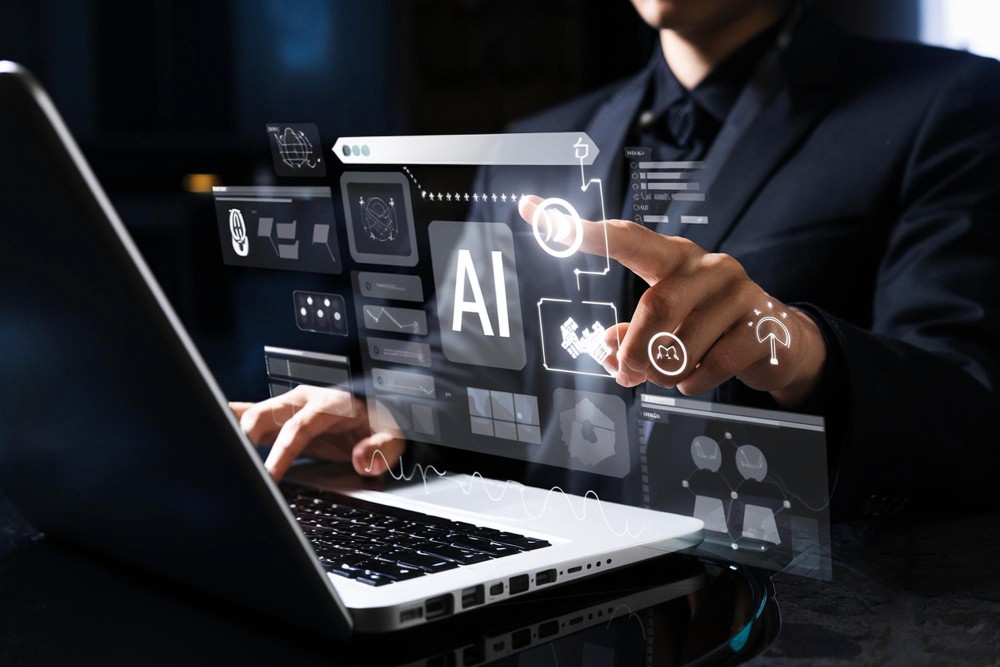
In the fiercely competitive landscape of Silicon Valley, it's rare to see giants like Google, Microsoft, and Amazon (AWS) setting aside their rivalries to collaborate. When they do, it signals an event of monumental importance that will fundamentally reshape the technological future. The cause for this unprecedented unity? The future of Artificial Intelligence.

In the fiercely competitive landscape of Silicon Valley, it's rare to see giants like Google, Microsoft, and Amazon (AWS) setting aside their rivalries to collaborate. When they do, it signals an event of monumental importance that will fundamentally reshape the technological future. The cause for this unprecedented unity? The future of Artificial Intelligence.