How Mr. Bean Became a Timeless Global Comedy Icon

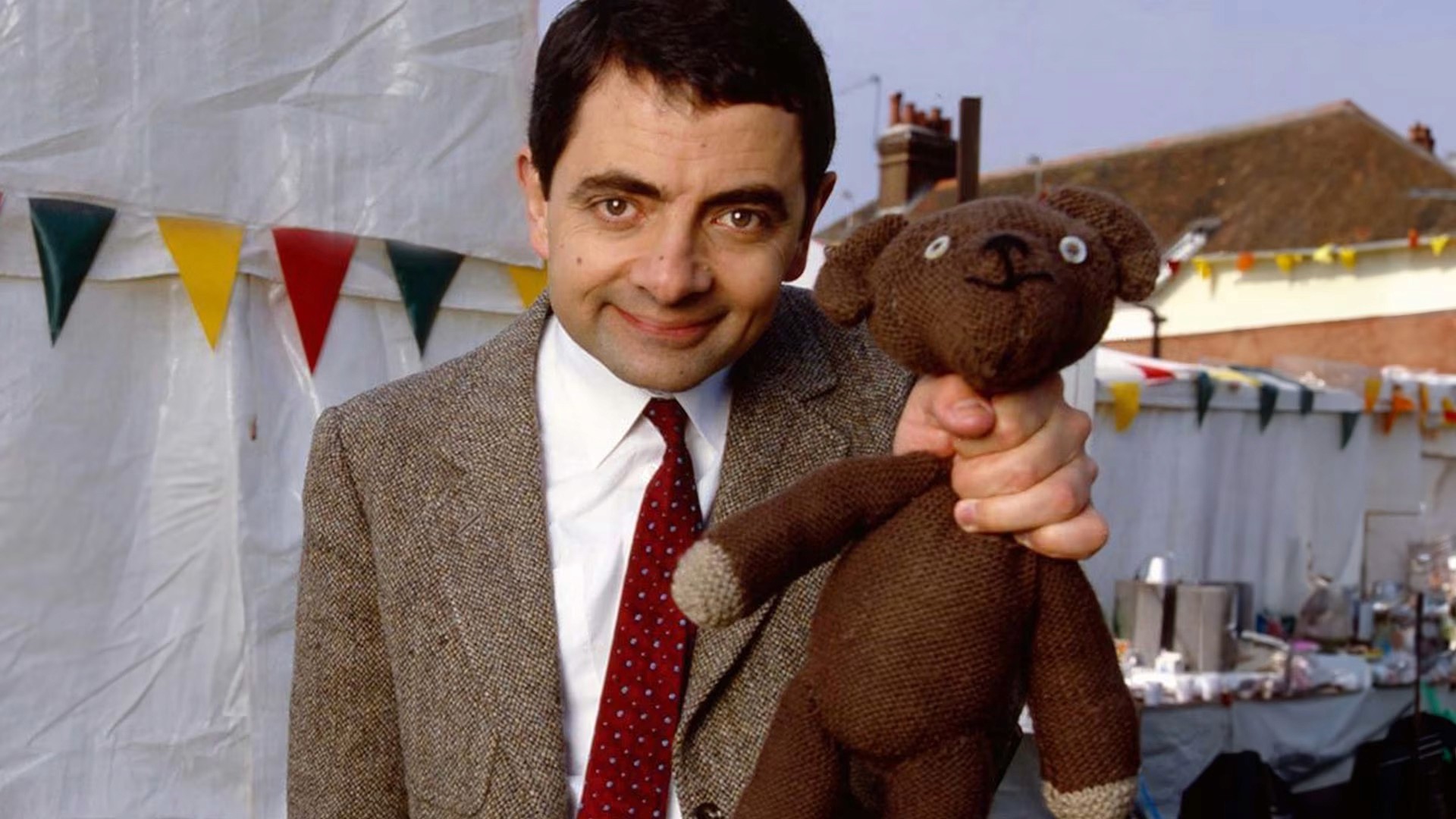
In an era dominated by high-tempo dialogue, punchline-heavy sitcoms, and localized satire, a tall, slender man in a slightly undersized tweed jacket achieved what few entertainers in human history ever have: universal, friction-free global laughter. With virtually no dialogue beyond muffled grunts, squeaks, and a low-pitched, muttered self-introduction, Mr. Bean transcended language barriers, cultural boundaries, and generational divides to become one of the most recognizable cultural icons on Earth.
Debuting on Britain’s ITV network on January 1, 1990, the original live-action television series of Mr. Bean consisted of a mere 14 core episodes (plus a 15th clip-show compilation). Yet, from this remarkably small catalog of original material sprang a global media empire spanning two blockbuster international feature films, an animated franchise lasting over 100 episodes, iconic appearances at global events like the London 2012 Olympic Opening Ceremony, and an algorithmic digital revival that commands tens of millions of subscribers and billions of views across YouTube, Facebook, and TikTok.
Portrayed with exquisite physical choreography by legendary British actor and comedian Rowan Atkinson, Mr. Bean is far more than a simple slapstick character. He is an architectural masterpiece of visual narrative, psychological truth, and non-verbal communication.
This comprehensive investigation explores the full arc of the Mr. Bean phenomenon: from its intellectual origins at Oxford University to the psychological mechanics of silent slapstick, the iconography of his universe, his deep cross-cultural adoption across developing nations, and his enduring reign in the digital era.
The Creative Genesis & Architectural Foundations
The origin story of Mr. Bean does not begin in a high-powered television writer's room, but within the quiet, Gothic quadrangles of The Queen’s College, Oxford. In the mid-1970s, Rowan Atkinson was pursuing his Master of Science (M.Sc.) in Electrical Engineering. Despite his technical academic focus, Atkinson possessed an extraordinary innate talent for physical expression and facial control.
During his time at Oxford, Atkinson joined the prestigious Oxford Revue, an undergraduate comedy group. Faced with the task of preparing a sketch for a show at the Oxford Playhouse, Atkinson stood in front of a mirror and began experimenting with bodily contortions, silent facial expressions, and bizarre mannerisms. Without writing a single line of text, he discovered an intriguing comedic persona: an eccentric, socially oblivious, visually intense character who navigated ordinary situations through extraordinary means.
"I was asked in my first term at Oxford to do a sketch in the show at the Oxford Playhouse, and I had never written anything... I just stood in front of the mirror and began to contort my face, and this strange, silent, creature emerged." - Rowan Atkinson
A Fateful Meeting of Minds
At the 1976 Edinburgh Fringe Festival, Atkinson’s path crossed with two individuals who would become instrumental in shaping British entertainment history:
Richard Curtis: An aspiring writer studying at Oxford who would go on to write Four Weddings and a Funeral, Notting Hill, and Love Actually. Curtis possessed a deep understanding of character motivation and narrative pacing, serving as the primary writing partner for Atkinson's silent routines.
Peter Bennett-Jones: A member of the rival Cambridge Footlights troupe, who recognized Atkinson's genius and subsequently became his long-time manager, executive producer, and strategic co-architect of his career.
The Evolution from Robert Box to "Mr. White" to Mr. Bean
Before Mr. Bean took his final form, Atkinson tested early prototypes of the silent character across various platforms:
The Just for Laughs Festival (Montreal, 1987): Atkinson insisted on performing his non-verbal routine to a French-speaking audience rather than an English-speaking one, testing whether pure visual physical comedy could transcend language barriers. The reaction was electric, proving that the character’s mechanics were inherently universal.
Canned Laughter (1979): A sit-com pilot created for ITV featuring a prototype character named Robert Box, who exhibited many of the visual traits, social awkwardness, and physical comedy beats later seen in Mr. Bean.
The Name Game: During pre-production for the 1990 television show, the writing team knew the character needed a simple, memorable name that sounded appropriately absurd yet mundane. Curtis and Atkinson initially considered Mr. White. Seeking something lighter and more organic, they began brainstorming vegetable-related names, briefly stopping at Mr. Cauliflower, before finally settling on the perfect, punchy moniker: Mr. Bean.
On January 1, 1990, at 8:00 PM, Thames Television broadcast the pilot episode, titled simply Mr. Bean. Directed by John Howard Davies, the episode garnered instant acclaim, drawing millions of viewers and laying the groundwork for a comedic legend.
The Mechanics of Comedy & Psychological Anatomy
To understand why Mr. Bean became a global phenomenon, one must deconstruct the comedic and psychological principles that govern his behavior.
The Heritage of Silent Cinema Slapstick
Rowan Atkinson’s performance in Mr. Bean is a modern continuation of the golden age of silent film. Rather than relying on contemporary dialogue, pop-culture references, or verbal satire, Atkinson built his performance on the foundational pillars of visual mastery:
Charlie Chaplin: The empathy of the lonely outsider navigating a world built for normal people.
Buster Keaton ("The Great Stone Face"): The precise, mechanical logic applied to chaotic environments, alongside high-stakes physical execution.
Jacques Tati (Monsieur Hulot): The subtle observation of modern societal absurdities, bureaucratic red tape, and architectural friction.
Laurel & Hardy: The deliberate escalation of minor problems into complete structural disasters.
Atkinson’s body acts as an instrument of narrative. Every glance, eyebrow twitch, stiff-legged walk, and tongue projection communicates clear internal thoughts, frustrations, and victories without requiring a single subtitle.
The Extraordinary in the Ordinary
The structural premise of nearly every Mr. Bean sketch follows a consistent formula: take a completely mundane, everyday activity and apply an absurdly complex, lateral-thinking solution to it.
Classical Sketch Examples:
Changing into Swimwear on a Beach: Instead of walking away to find a changing room, Bean undertakes a excruciatingly complex routine to swap his trousers for swimming trunks under a pair of shorts, all while attempting to maintain eye contact with a blind man sitting nearby.
Making a Sandwich in a Park: Lacking kitchen utensils, Bean uses his credit card to spread butter, his scissors to trim lettuce, his hot-water bottle to crush pepper, and his own mouth to wash and spin-dry lettuce.
Driving from the Roof: Finding his Mini packed to capacity with newly purchased furniture, Bean mounts an armchair to the roof of the car, constructing an intricate system of ropes, pulleys, and a broom-handle throttle to drive the vehicle through urban streets.
By transforming daily chores into high-wire engineering puzzles, the show taps into a universal human experience: our collective struggle with the inanimate objects and unwritten rules of modern civilization.
The "Child in a Man's Body" Archetype
Psychologically, Mr. Bean is best understood as a grown man operating with the pure, uninhibited ego of a four-year-old child. As Atkinson has frequently noted:
"Mr. Bean is essentially a child trapped in a man's body. He is naturally anarchic, self-centered, competitive, yet innocent and easily delighted by the smallest triumphs."
This psychological balance is vital:
Selfishness without Malice: Bean frequently acts out of petty jealousy, laziness, or spite (e.g., cutting in line at the hospital, sabotaging a rival’s parking space). However, because his motivations are childish rather than genuinely malicious, the audience forgives his bad behavior.
Anarchical Logic: A child does not view a necktie as a formal fashion statement; they view it as a potential paintbrush or a tool to dip in tea. Bean interacts with the adult world through this same filter of innocent, unrestricted utility.
Part III: Iconography & Visual Material Culture
The world of Mr. Bean is sparse, highly focused, and instantly recognizable. The visual elements function as crucial narrative pillars that support the entire structure of the show.
The Tweed Suit
Bean’s default costume a slightly worn brown tweed jacket, narrow red tie, dark trousers cut slightly too short at the ankle, and brown leather shoes serves multiple purposes. It projects an image of an unglamorous, timeless outcast who exists outside fashion trends, ensuring the show never feels visually dated regardless of when or where it is viewed.
Teddy: The Ultimate Silent Foil
Bean’s best friend, confidant, and primary companion is a small, brown, knitted teddy bear with button eyes and sausage-like limbs. Teddy is a brilliant narrative device:
Emotional Mirror: Because Bean has no human friends, his interactions with Teddy reveal his rare moments of vulnerability, affection, and tragic loneliness.
Absurd Utility: Despite treating Teddy as a living creature (reading him bedtime stories, giving him night-goggles), Bean frequently treats him with shocking pragmatic cruelty—using him as a paintbrush, a dish sponge, or decapitating him during laundry day.
The 1977 Austin Citron Green Mini
Bean's primary mode of transportation is a 1977 British Leyland Mini 1000 featuring a matte green (Citron) finish and a matte black bonnet. The car itself became a legendary character in television history, equipped with bizarre security features including a padlock-and-latch mechanism on the driver's door and a removable steering wheel.
The Mini’s ongoing comedic narrative involves its recurring feud with a light-blue, three-wheeled 1972 Reliant Regal Supervan III, which Bean aggressively nudges off the road, tips over in parking spaces, or forces out of traffic without ever acknowledging its driver.
Structural Ecosystem & Master Catalog
To appreciate the scale and efficiency of the Mr. Bean intellectual property (IP), the table below details the essential milestones, media iterations, and commercial metrics across the entire franchise history.
Category | Medium / Title | Release / Air Period | Key Features & Historical Significance | Commercial / Global Impact |
TV Series | Mr. Bean (Original Live-Action) | 1990 – 1995 (14 Main Episodes) | Created by Rowan Atkinson & Richard Curtis. Pure physical slapstick; minimal speech. | Broadcast in 200+ territories; peak UK TV audience of 18.74 million. |
Feature Film | Bean: The Ultimate Disaster Movie | 1997 | Directed by Mel Smith. Bean moves to Los Angeles as an art curator assistant; destroys Whistler’s Mother. | $251.2 million worldwide box office on an $18M budget. |
Feature Film | Mr. Bean’s Holiday | 2007 | Directed by Steve Bendelack. Homage to French cinema & Jacques Tati; Bean travels across France to Cannes. | $232.2 million worldwide box office; critically praised for returning to silent roots. |
Animation | Mr. Bean: The Animated Series | 2002 – 2019 (130 Episodes) | Voice work by Rowan Atkinson. Expanded visual freedom, sci-fi elements, cartoon physics. | Premiered globally on CITV & Boomerang; broadened reach to new generations of children. |
Live Event | London 2012 Olympic Opening Ceremony | July 27, 2012 | Live comedy routine performing "Chariots of Fire" synthesizer note with London Symphony Orchestra. | Estimated global live television audience of over 900 million viewers. |
Digital Platforms | YouTube, Facebook, & TikTok Ecosystem | 2007 – Present | Short-form clips, digital re-masters, reaction memes, and localized video feeds. | 30M+ YouTube subscribers; tens of billions of cumulative views globally. |
Detailed Analysis of Classic Sketches
To truly understand how Mr. Bean functions as a masterclass in screenwriting and performance, we can analyze four of its most celebrated narrative sequences.
The Exam Room (Mr. Bean, Episode 1)
The Premise: Bean sits down in a university hall to take a calculus exam, only to realize he studied the wrong subject (Trigonometry).
The Escalation:
Calm preparation: Sorting dozens of pens, timers, and luck charms on the desk.
Realization: Peeking at the exam paper and feeling immediate, silent panic.
Cheating escalation: Trying to spy on his neighbor's paper using contorted neck stretches, mirror reflections, and fake drops of his pen.
The Climax: Running out of time, he discovers at the final bell that there were two papers in the envelope, and he had completely ignored the one he actually studied for.
The Christmas Turkey (Merry Christmas, Mr. Bean, Episode 7)
The Premise: Bean is preparing a massive roast turkey for Christmas dinner with his girlfriend, Irma Gobb.
The Escalation:
While stuffing the turkey with bread and vegetables, his watch drops deep inside the cavity.
He reaches inside to retrieve it, gets his hand stuck, and pushes further until his entire head slips into the turkey.
Unable to pull the raw, heavy bird off his head, he wanders blindly around his apartment trying to hide his predicament when Irma arrives at the door.
The Comedy Engine: The sight of a grown man in a suit with an enormous raw turkey body for a head trying to act nonchalant and host a dinner party remains an immortal moment of visual absurdity.
The Dental Surgery (Trouble with Mr. Bean, Episode 6)
The Premise: Running late for a morning dentist appointment, Bean must drive to the clinic while getting dressed and brushing his teeth inside his moving Mini.
The Escalation:
Arriving at the clinic, he accidentally anesthetizes the dentist's leg with an accidental needle stick.
When the dentist collapses unconscious, Bean decides to perform his own complex dental work using heavy-duty mechanical drills and pliers.
The Lesson: Bean’s total lack of social inhibition allows him to turn terrifying medical procedures into absurd DIY projects.
Roof-Driving a Mini (Do-It-Yourself Mr. Bean, Episode 9)
The Premise: Having purchased an immense haul of home improvement goods at an armchair sale, Bean realizes he cannot fit inside the car to drive home.
The Mechanics: He installs an armchair on the roof rack, secures himself into it, ties string to the steering wheel, attaches a broom handle to the pedals, and navigates through heavy urban traffic.
The Result: The routine blends genuine stunt work, mechanical absurdity, and sheer physical commitment, resulting in one of cinema and television’s most recognizable images.
Cinematic Adaptations & Franchise Expansion
As the success of the television show skyrocketed, the brand expanded into long-form cinema and animated storytelling, testing whether a silent short-form character could hold an audience’s attention across different formats
Bean: The Ultimate Disaster Movie (1997)
Directed by Mel Smith, this feature adaptation took the bold step of transplanting Mr. Bean into an American narrative environment. Employed as a bumbling security guard at the Royal National Gallery in London, Bean is mistakenly sent to Los Angeles as an art scholar to oversee the unveiling of James McNeill Whistler's famous painting, Whistler’s Mother.
Narrative Evolution: To sustain a 90-minute narrative, the film gave Bean more dialogue than he had ever spoken before, alongside an emotional subplot involving an American family.
Box Office Success: Made on an $18 million budget, the film grossed over $251 million globally, proving that the character’s brand possessed massive worldwide pull.
Mr. Bean’s Holiday (2007)
A decade later, director Steve Bendelack helmmed a second feature film, explicitly designed as an homage to classic European silent cinema and Jacques Tati's Monsieur Hulot's Holiday.
Winning a raffle ticket to Cannes, Bean embarks on a journey across France, accidentally separating a young boy from his father and making his way to the Cannes Film Festival.
Return to Pure Silence: Unlike the 1997 film, Mr. Bean's Holiday stripped away English dialogue, relying almost entirely on French non-verbal misunderstandings, physical gags, and visual beauty.
Critical Distinction: Fans and critics praised the film as a truer, far more elegant realization of the character’s television origins.
Mr. Bean: The Animated Series (2002–2019)
Recognizing that children made up a significant portion of Bean’s audience, Tiger Aspect Productions created a heavily stylized animated series.
Rowan Atkinson’s Involvement: Atkinson voiced the character’s grunts and vocalizations, performing physical motions in a studio so animators could capture his signature rhythm and facial contortions.
Creative Freedom: The animated medium allowed the writers to push beyond practical real-world limits incorporating alien encounters, complex sci-fi gadgets, exaggerated animal behavior, and magical scenarios while keeping the character grounded in his core personality traits.
Cross-Cultural Impact & The South Asian Connection
One of the most extraordinary aspects of Mr. Bean is its deep integration into the cultural fabric of developing nations, particularly across South Asia (Bangladesh, India, Pakistan), Southeast Asia, the Middle East, and Africa.
The Bangladesh Television (BTV) Era
During the 1990s and early 2000s, state media outlets like Bangladesh Television (BTV) acquired broadcast rights for Mr. Bean. In a region with diverse linguistic dialects and varying levels of English literacy, Mr. Bean achieved unprecedented popularity:
Democratic Entertainment: A child in a remote rural village and an urban scholar in Dhaka could watch the exact same episode and experience the identical comedic high, because no translation was required.
Safe Family Viewing: The absence of vulgarity, political commentary, or offensive language made the show the gold standard for wholesome family entertainment across conservative households.
Inspiration for Local Creators: Entire generations of modern South Asian visual content creators, digital comedians, and stage performers cite Rowan Atkinson's physical timing as their primary blueprint for non-verbal storytelling.
During periods of political tension, economic hardship, or societal stress, broadcasts of Mr. Bean served as a unifying source of comfort and joy a lighthearted escape enjoyed by millions regardless of social background.
Digital Immortality: The Algorithmic Sovereign
While many 1990s television shows struggled to transition into the modern digital media era, Mr. Bean saw its global reach expand exponentially. The character was practically custom-built for today's internet video platforms.
The YouTube & Social Media Phenomenon
The Mr. Bean official YouTube channel is an absolute titan in digital entertainment:
Massive Subscriber Base: Commanding over 30 million subscribers, the channel frequently outperforms modern Hollywood studios in engagement metrics.
Global Content Distribution: Because the clips require no dubbing or translation, the algorithm delivers Mr. Bean videos seamlessly to viewers in Brazil, India, Indonesia, Nigeria, the UK, and the United States simultaneously.
The Meme Machine
In internet meme culture, Rowan Atkinson’s face is universally recognized currency:
"If You Know What I Mean": A frame of Bean wiggling his eyebrows from the episode The Return of Mr. Bean became one of the most famous reaction graphics in internet history, symbolizing cheeky double entendres.
TikTok & Reels: Short 15-to-30-second clips of Bean’s physical reactions continuously go viral, proving that his comedy works just as brilliantly on a vertical smartphone screen as it did on a cathode-ray TV in 1990.
The Psychological Value of Physical Comedy
Why does Mr. Bean continue to resonate so deeply in a high-stress, hyper-connected digital world? The answer lies in the psychological mechanisms of visual laughter.
Low Cognitive Friction
Modern entertainment frequently demands intense emotional investment, complex narrative tracking, and deep familiarity with pop-culture discourse. Mr. Bean offers the exact opposite: pure, low-friction escapism.
A viewer can drop into any point of any sketch, instantly grasp the situation, and enjoy high-level physical performance without feeling lost or overwhelmed.
Emotional Catharsis & Stress Relief
Watching someone completely ignore formal social etiquette provides a healthy, vicarious sense of freedom:
We spend our lives standing quietly in lines, filling out forms, and trying to act like composed adults.
Seeing Bean blow up a paper bag to scare a child, or install a padlock on his car door, gives us a harmless outlet for our own secret desire to rebel against rigid social rules.
It is a gentle form of social rebellion innocent, victimless, and deeply therapeutic.
Master Blueprint for Creators & Storytellers
The legacy of Mr. Bean offers invaluable strategic lessons for writers, filmmakers, digital content creators, and media producers.
Prioritize Visual Narrative over Dialogue: If a story can be told using pure action, facial expression, and body language, it will always travel further than a story locked behind localized dialogue.
Build Instantly Identifiable Visual IP: A character’s costume, primary prop, and main vehicle should be iconic enough to function as a silhouette logo.
Focus on Universal Human Experiences: Going to the dentist, parking a car, buying furniture, or sitting an exam are shared human experiences that cross every national border.
Protect Quality over Quantity: The original live-action Mr. Bean television run produced only 14 core episodes, yet achieved dynamic global immortality because every single frame was crafted with obsessive physical precision.
The Quiet Legacy of a Global Icon
"Laughter is a universal language. It requires no translation,
respects no borders, and belongs to anyone willing to smile."
Mr. Bean stands as one of the most remarkable achievements in the history of global comedy entertainment. Through the physical mastery of Rowan Atkinson, the creative partnership of Richard Curtis and Peter Bennett-Jones, and a deep respect for the art of silent slapstick, a quiet man in a green Mini conquered the world.
Without uttering speeches, making political remarks, or relying on complex dialogue, Mr. Bean achieved what world leaders and philosophers have sought for centuries: he brought humanity together in shared moments of pure, unadulterated joy.
As long as human beings struggle with life's small annoyances parking a car, packing a suitcase, or trying to stay awake in a quiet room the eccentric little man in the tweed suit and his faithful teddy bear will be waiting to offer the ultimate cure: timeless, universal, and everlasting laughter.