Why Canada is the Land of Water - North America's Liquid Heart

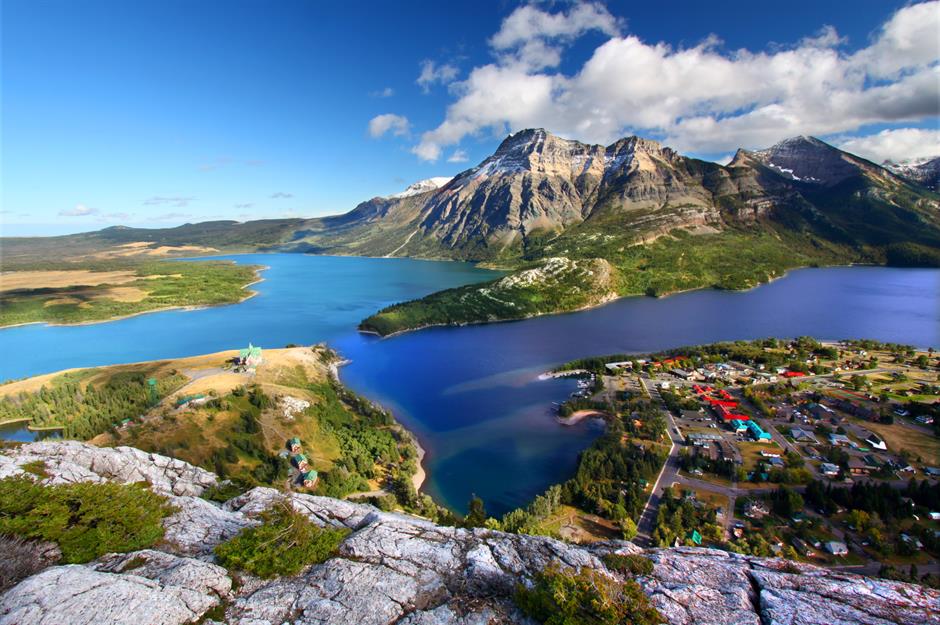
Canada, the world's second-largest country by land area, is renowned globally for its vast wilderness, breathtaking natural beauty, and, most distinctively, its staggering abundance of water. This nation is frequently and accurately nicknamed "The Land of Water" because an astonishing proportion of its territory is covered by lakes, rivers, and other freshwater bodies.
The sheer scale is hard to comprehend: Canada is home to approximately 879,800 medium to large lakes, and when accounting for smaller ponds and wetlands, that number swells to well over 2 million. This watery landscape holds approximately 20% of the world's total freshwater supply. Dominating this liquid empire is Lake Superior, shared with the US, which stands as the largest freshwater lake globally by surface area.
These water bodies are not merely scenic backdrops; they are the lifeblood of Canada, playing foundational roles in its environment, economy, culture, and, increasingly, in global discussions about climate resilience.
As we move toward the mid-2020s, Canadian waterways have become a focal point in discussions surrounding climate change, environmental conservation, and sustainable development. This article delves into the profound significance of Canada's freshwater resources, the unique importance of Lake Superior, and the crucial ecological, economic, and cultural roles these waters play, leveraging updated information for a comprehensive view.
Canada's Freshwater Empire - A Natural Resource of Global Scale
The massive scale and sheer variety of Canada's water resources position it as a critical steward of the world’s freshwater. The country's surface area is nearly 9% covered by water, a proportion unmatched by almost any other nation.
Countless Lakes and Geological Origins
The vast number of lakes found across the Canadian landscape over 2 million in total demonstrates an unparalleled aquatic diversity. This count includes not only the renowned Great Lakes but also the massive Great Bear Lake and Great Slave Lake in the North, and countless smaller, pristine bodies of water scattered throughout British Columbia, Quebec, and the Northwest Territories.
The formation of these lakes is a geological story largely defined by one force: glaciation.
The Glacial Hand: The majority of Canada's lakes, including the vast Great Lakes system (Superior, Huron, Erie, and Ontario), are relics of the last Ice Age. Massive continental glaciers, thousands of feet thick, scoured and eroded the bedrock, creating deep basins that subsequently filled with meltwater as the glaciers retreated over 10,000 years ago.
A Crucial Ecosystem: These vast, clean lakes are essential to the nation's environment, supporting incredible biodiversity and acting as major climate regulators.
The Significance of the Great Lakes System
The Great Lakes Superior, Huron, Michigan, Erie, and Ontario are shared between Canada and the United States and represent the largest system of interconnected freshwater lakes on Earth. They are an economic and environmental powerhouse.
The St. Lawrence Seaway: This network of waterways, canals, and locks, linking the Great Lakes to the Atlantic Ocean via the St. Lawrence River, is one of the world's most significant deep-draft commercial shipping routes, serving as a critical artery for North American trade.
A Note on Updated Data (Mid-2020s Perspective)
As of the mid-2020s, research confirms that despite the scale, Canada's water is not an infinite resource. Increased focus has been placed on the renewal rate of the water, not just the volume. Studies by groups like Environment and Climate Change Canada emphasize the need for conservation, particularly in the Prairies and southern regions where population density and agricultural demands are highest.
Key Facts on Canada's Major Lakes
This table provides an overview of the largest and most significant freshwater bodies located entirely within or shared by Canada, focusing on size, location, and key features.
Lake Name | Location (Province/Territory) | Surface Area (sq. km) | Average Depth (m) | Type of Water | Key Significance / Facts |
Lake Superior | Shared (Ontario / USA) | 82,103 | 147 | Freshwater | World's largest freshwater lake by surface area; holds 10% of the world's freshwater. |
Lake Huron | Shared (Ontario / USA) | 59,595 | 59 | Freshwater | Second largest of the Great Lakes; famous for Georgian Bay and over 30,000 islands. |
Great Bear Lake | Northwest Territories (NWT) | 31,328 | 72 | Freshwater | Largest lake entirely within Canada; located near the Arctic Circle; remains frozen for much of the year. |
Great Slave Lake | Northwest Territories (NWT) | 28,568 | 61 | Freshwater | Second largest lake entirely within Canada; North America's deepest lake (614 m max depth); source of the Mackenzie River. |
Lake Erie | Shared (Ontario / USA) | 25,745 | 19 | Freshwater | Shallowest and warmest of the Great Lakes; highly vulnerable to intense algal blooms. |
Lake Winnipeg | Manitoba | 24,387 | 12 | Freshwater | Canada's sixth-largest lake; important for commercial fisheries; high ecological and agricultural significance. |
Lake Ontario | Shared (Ontario / USA) | 18,979 | 86 | Freshwater | Smallest of the Great Lakes; vital for trade, hydroelectric power, and major cities (Toronto). |
Lake Athabasca | Shared (Alberta / Saskatchewan) | 7,935 | 20 | Freshwater | Important source of the Slave River; near the Athabasca oil sands region. |
Reindeer Lake | Shared (Saskatchewan / Manitoba) | 6,650 | 15 | Freshwater | One of the deepest large lakes in Canada; known for excellent fishing and remote wilderness. |
Lake Superior - The Crown Jewel of Freshwater
Lake Superior, often called the "Gitche Gumee" (Great Sea) by the Anishinaabe indigenous people, is a natural wonder that transcends geographical boundaries. Situated between the Canadian province of Ontario and the US states of Minnesota, Wisconsin, and Michigan, it is the undisputed heavyweight of the Great Lakes.
Unmatched Dimensions and Volume
Largest by Surface Area: With a surface area of approximately $82,100\text{ square kilometers}$ (about the size of South Carolina), Lake Superior is the world's largest freshwater lake.
Volume and Depth: It holds roughly 10% of the world's accessible surface freshwater. With a maximum depth of 406 meters ($1,333\text{ feet}$), it is also one of the world's deepest lakes. Its immense volume means that even if all the other Great Lakes were completely drained, they could still fit into Superior with room to spare.
The Name: Its name derives from the French term “lac supérieur,” meaning "Upper Lake," due to its northernmost and highest elevation among the Great Lakes.
Modern Economic and Environmental Importance
In the mid-2020s, Lake Superior remains a vital hub for tourism, the commercial fishing industry, and especially the shipping of raw materials (iron ore, grain, coal). However, the narrative around the lake is shifting:
Climate Research Hotspot: The vast, deep, and relatively clean waters of Superior make it an essential natural laboratory for scientists. Research in the mid-2020s often focuses on its thermal stability, how it moderates regional climate and how rapidly it is warming compared to the other Great Lakes.
The Ecological Imperative - Biodiversity and Climate Vulnerability
Canada's water bodies are central to global biodiversity and are acutely sensitive to the global climate crisis.
A Cradle of Biodiversity
The lakes and rivers of Canada support a vast and complex array of life:
Fisheries: They are home to numerous commercially and recreationally important fish species, including Salmon, Trout (Lake and Brook), and Walleye. The ecosystem of Lake Superior, for example, is critical for Lake Trout, which thrive in its cold, deep waters.
Avian Habitats: These waterways are vital stopovers and breeding grounds for migratory birds, including ducks, geese, and various shorebirds.
Boreal Forests: The extensive network of lakes and rivers in the Canadian Shield region is interwoven with the vast boreal forest, forming one of the world's largest contiguous terrestrial ecosystems.
Acute Impacts of Climate Change
Current research shows that climate change is having a profound and sometimes erratic impact on Canada's waterways:
Water Level Volatility: Studies in the mid-2020s have highlighted extreme fluctuations in Great Lakes water levels. Warmer weather and reduced ice cover accelerate evaporation, leading to low water years. Conversely, intense, erratic precipitation events (a hallmark of climate change) cause sudden, destructive high water levels. This volatility damages coastal communities, shipping infrastructure, and harbors.
Increased Water Temperature: Warming surface temperatures contribute to the increased frequency and intensity of Algal Blooms (like Cyanobacteria, or blue-green algae), particularly in shallower, nutrient-rich lakes like Lake Erie. These blooms reduce water quality, create "dead zones" by depleting oxygen, and pose risks to human and animal health.
Invasive Species: Warmer waters make it easier for non-native, invasive species to thrive and spread. The ongoing threat posed by species like the Zebra Mussel and Quagga Mussel remains a major concern in Lake Superior and the other Great Lakes, as they filter-feeders that outcompete native fish species and damage infrastructure. The Canadian government is dedicating significant resources to their control.
The Economic Engine - Commerce, Trade, and Tourism
The economic importance of Canada's water bodies extends far beyond simple aesthetics, providing the backbone for multiple billion-dollar industries.
The Commercial Fishery
The commercial fishing industry, particularly within the Great Lakes, remains a significant contributor to the Canadian economy and food security.
Economic Impact: As of the mid-2020s, the broader fishing sector (including aquaculture and processing) employs tens of thousands of people and generates billions in annual revenue, though careful management and regulation are required to ensure the sustainability of native fish stocks.
Shipping and Great Lakes Trade
The Great Lakes and the St. Lawrence Seaway are indispensable for North American trade. This deep-draft marine highway connects industrial centers in the Canadian heartland and the American Midwest.
Tonnage Moved: In the most recent full reporting years (e.g., 2024 data), the Great Lakes-Seaway system transported hundreds of millions of metric tons of cargo, primarily bulk commodities like iron ore (for steel production), grain (for export), and coal. This transport corridor is crucial for the automotive, agricultural, and construction industries of both countries.
The Tourism Powerhouse
Canada's stunning lake-centered landscapes are a major draw for both international and domestic tourism.
Lake Superior Shoreline: Cities along the Lake Superior coast, such as Thunder Bay and Sault Ste. Marie in Ontario, are popular gateways for outdoor enthusiasts. Activities like kayaking, deep-sea fishing, sailing, and hiking along the rugged Sleeping Giant Provincial Park coastline are major attractions.
Revenue Generation: Water-centric tourism (including waterfront developments, recreational marinas, and national park usage) is estimated to contribute substantially to the country’s multi-billion-dollar tourism industry annually.
Cultural and Historical Resonance
For millennia, Canada's water bodies have shaped its history, culture, and the very identity of its people.
The Heart of Indigenous Culture
For Canada’s First Nations (Indigenous peoples), water is a sacred entity, a source of life, and a central character in their creation stories and oral traditions.
Ojibwe and the Great Sea: Groups like the Ojibwe, Cree, and Algonquin hold Lake Superior in particularly high regard. The name "Gitche Gumee" reflects their perception of its immense power and spirituality. Traditional ecological knowledge held by these communities is now being integrated into modern conservation strategies.
Historical Trade and Settlement
The lakes and rivers were the original highways of Canada.
The Fur Trade: In the 17th and 18th centuries, French and British fur traders used the vast river systems and the Great Lakes to transport furs from the interior to the coastal ports. The canoes and later the bateaux were the primary vehicles of commerce and exploration, directly influencing the settlement patterns of early Canada.
Preservation: Today, various museums, heritage sites, and cultural centers are dedicated to preserving this rich history, from early Indigenous use to the era of European colonization and commercial shipping.
Canada’s Commitment to Water Stewardship (Mid-2020s Focus)
Recognizing the immense value and current threats to its freshwater, the Canadian government and its partners have significantly ramped up conservation efforts in the mid-2020s.
Major Conservation Funding and Initiatives
The Great Lakes Protection Initiative: Under the current iteration of this project (often with multi-year budgets exceeding $1 billion), funds are strategically invested between 2023 and 2028 (or similar current periods). The goals are focused and clear: improving water quality, controlling the spread of invasive species, restoring critical habitat, and strengthening science and monitoring.
International Cooperation: The Great Lakes Water Quality Agreement (GLWQA) between Canada and the United States remains the cornerstone of joint efforts. Updated Annexes within the GLWQA focus on emerging challenges like harmful algal blooms, contaminants of emerging concern (CECs), and climate resilience.
The Role of Indigenous and Local Communities
Local communities and First Nations groups are no longer merely consultees; they are active partners in conservation efforts.
Knowledge Integration: Indigenous expertise in water quality monitoring, fishery management, and sustainable land use is being formally incorporated into government programs. For example, Indigenous communities are utilizing specialized, high-tech tools to monitor the health of Lake Superior’s tributaries.
Citizen Science: Numerous citizen science initiatives encourage local engagement in reporting water quality, monitoring invasive species, and participating in shoreline cleanups, reinforcing a shared responsibility for stewardship.
What Canada's Water Teaches the World
In the mid-2020s, Canada's freshwater systems have become invaluable research sites with global implications.
Climate Change Proxies: Research, such as that conducted by institutions like the University of Toronto, highlights that Canada's vast network of lakes and their surrounding watersheds offer an ideal location for studying the full spectrum of climate change impacts. The data collected on ice-cover duration, warming rates, and extreme weather runoff provides essential benchmarks for understanding and mitigating similar issues in other large water bodies worldwide.
Sustainable Management Models: Canada’s complex challenge of balancing massive industrial use (shipping, mining, agriculture) with environmental protection (biodiversity, climate resilience) serves as a vital case study for nations facing similar resource management dilemmas.
Guardians of the Great Sea
Canada is, without a doubt, a "Land of Water." Its unparalleled abundance of lakes, rivers, and wetlands, crowned by the majestic Lake Superior, is an integral, irreplaceable component of its natural, economic, and cultural fabric. These water bodies enrich Canada's biodiversity, power its economy, and define its heritage.
However, the immense beauty of these waters is shadowed by the growing urgency of global threats like climate change, pollution, and invasive species. The current era demands increased awareness, robust international cooperation, and dedicated investment to secure this resource.
In 2025, Canada’s waters are not just a matter of domestic pride; they are a significant global asset. Protecting these cold, deep, and life-giving waters is a collective responsibility that will shape not only the future of Canada but the well-being of the entire North American continent and, indeed, the global freshwater supply.
References:
Water bodies of Canada - Wikipedia
Lake Superior - Wikipedia
Climate Change and the Great Lakes - University of Toronto